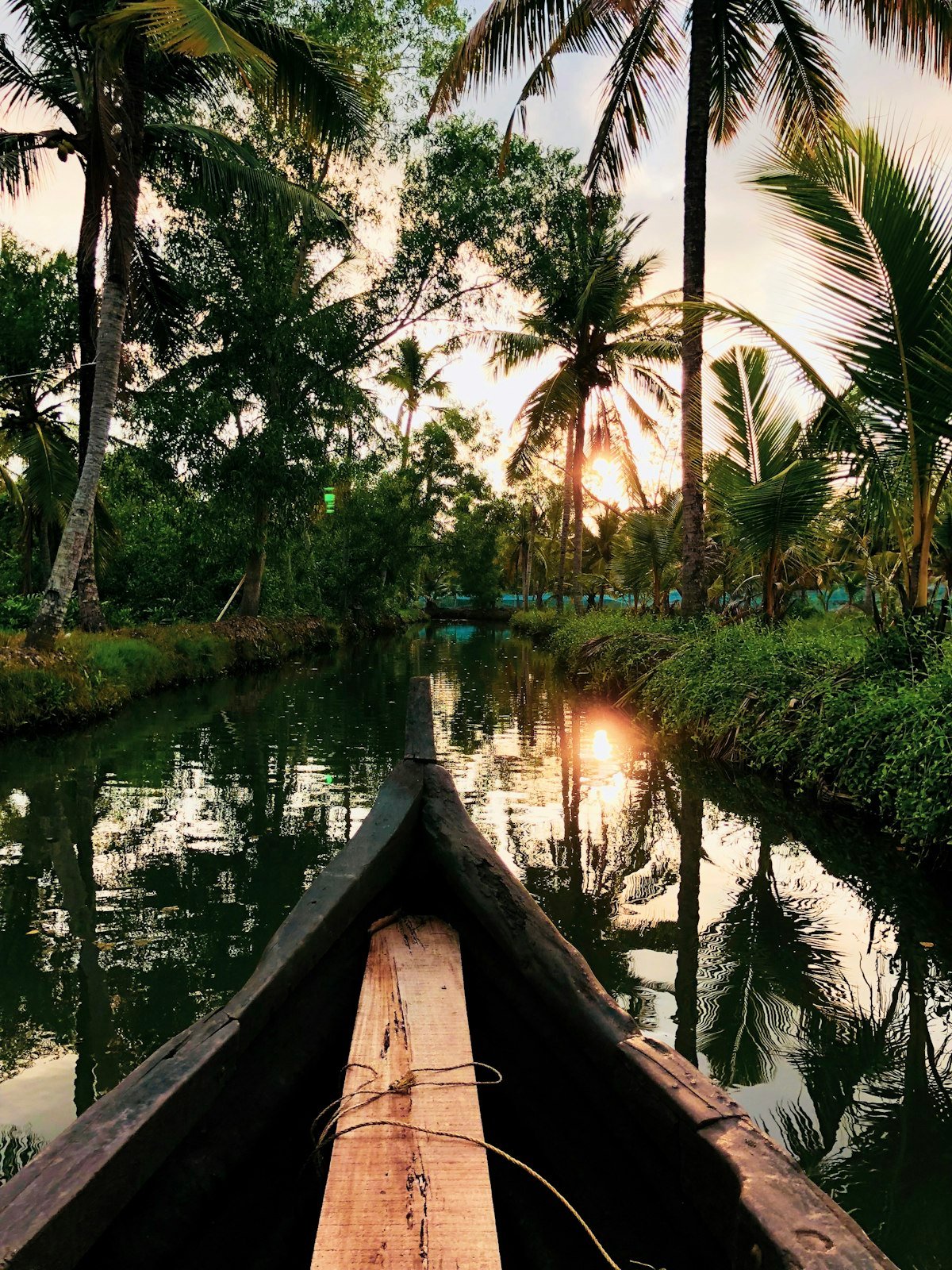
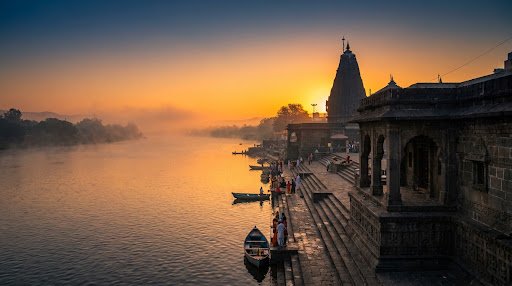
When the celestial alignment of Guru in Simha Rashi (Jupiter in Leo) ushers in the monumental Nashik-Trimbakeshwar Simhastha Kumbh Mela 2027, millions of devotees, sadhus, and seekers from across the globe converge upon Maharashtra’s sacred riverbanks. While the Shaiva Akharas take their royal dips at Kushavarta Kund in Trimbakeshwar, the spiritual heart of the Vaishnava Akharas and countless millions of pilgrims beats inside the twin holy domains of Panchavati and Tapovan.
Nestled along the north bank of the sacred Godavari River (Dakshina Ganga), the Panchavati and Tapovan Pilgrimage Circuit is not merely a cluster of stone shrines—it is living geography inscribed into the verses of Valmiki’s Ramayana. Here, under the shade of ancient banyan trees, Lord Rama, Mata Sita, and Lord Laxman spent over two years of their exile (Vanvas), sanctifying every square foot of soil with divine pastimes (leelas).
Whether you are preparing for your royal Shahi Snan or undertaking a soulful heritage parikrama, this comprehensive guide unlocks the vital temples, sacred kunds, hidden mythological marvels, and an optimized walking circuit for your Nashik Kumbh pilgrimage.
Executive Summary: Panchavati & Tapovan Circuit at a Glance
| Pilgrimage Zone | Major Highlights | Primary Presiding Deity | Best Time for Darshan | Avg. Walking Time |
|---|---|---|---|---|
| Ramkund Ghats | Ramkund, Asthi Vilay Kund, Sita Kund, Laxman Kund | Sacred Godavari / Lord Rama | 05:00 AM – 08:00 AM (Holy Dip & Snan) | 1.0 – 1.5 Hours |
| Panchavati Central | Shree Kalaram Temple, Sita Gumpha, 5 Banyan Trees | Lord Rama (Black Stone Idol) & Sita Mata | 07:30 AM – 11:30 AM | 2.0 Hours |
| Godavari North Ghats | Kapaleshwar Mahadev, Naroshankar Temple, Sundarnarayan | Lord Shiva & Lord Vishnu | 11:30 AM – 01:00 PM / 05:00 PM – 07:30 PM | 1.5 Hours |
| Tapovan Sacred Sector | Kapila-Godavari Sangam, Laxman Kund, Surpanakha Sthal, Sadhugram | Lord Laxman, Rishi Hermitages, Vaishnava Akharas | 02:30 PM – 05:30 PM | 2.0 Hours |
| Evening Climax | Ramkund Ganga Godavari Maha Aarti & Deepotsav | Mata Godavari | 06:45 PM – 07:45 PM | 1.0 Hour |
The Epic Tapestry: Why Panchavati and Tapovan Are Holy
To walk through Panchavati is to step into the Aranya Kanda of the Ramayana. When Maharishi Agastya directed Lord Rama to settle in the fertile, pristine forests of Dandakaranya along the Godavari, he specifically designated this grove.
The name Panchavati originates from the Sanskrit roots Pancha (five) and Vata (Banyan trees, Ficus benghalensis). These five colossal trees formed a natural canopy under which Lord Laxman erected their earthen cottage (Parnakuti).
Adjacent to Panchavati lies Tapovan—literally the “Forest of Penance.” In ancient eras, great rishis such as Gautama, Kashyapa, and Agastya engaged in severe tapasya along the river bend. It is also the turning point of the Treta Yuga epic: here, demoness Surpanakha encountered Rama and Laxman, leading Laxman to sever her nose (Nasika), triggering the events that culminated in the fall of Lanka and bestowing this holy city with the name Nashik.
During the Simhastha Kumbh Mela, the divine cosmic vibrations of these forests reach their zenith, turning this 5-kilometer pilgrimage circuit into one of the most merit-bestowing walks in Sanatana Dharma.
Part I: The Holy Panchavati Temple Circuit (Core Sanctums)
                       [ GODAVARI RIVER ]
                              │
         ┌────────────────────┼────────────────────┐
         │                    │                    │
    [ Ramkund ]       [ Naroshankar ]      [ Sundarnarayan ]
    (Snan Hub)        (Victory Bell)       (Equinox Marvel)
         │                    │
    [ Kapaleshwar ]           └────────────────────┐
    (No Nandi Shiva)                               │
         │                                         │
    [ Kalaram Temple ] ──────── [ Sita Gumpha & 5 Vata Trees ]
1. Ramkund: The Cosmic Focal Point of the Holy Snan
No pilgrimage to Nashik during Kumbh Mela begins anywhere other than Ramkund. Constructed in 1696 by Chitrarao Khatarkar and later renovated by the Holkars and Peshwas, this stone-stepped stepped reservoir is where Lord Rama took his daily morning baths and performed the sacred Shraddha and Pinda Daan rituals for his father, King Dasharatha.
- Asthi Vilay Kund (Bone Dissolution Kund): A rare geological and cosmic wonder located within Ramkund. Bones of deceased ancestors immersed here are said to dissolve completely into the mineral-rich waters within hours, granting Moksha to departed souls.
- Sita Kund & Laxman Kund: Flanking kunds where Mata Sita and Lord Laxman performed their morning ablutions.
- Dhanushkodi: The spot where Lord Rama is believed to have dipped his bow (Dhanush) to draw sweet underground spring water.
- Kumbh Mela Significance: Ramkund is the designated sanctum where the Vaishnava Akhara Acharyas, Mahamandaleshwars, and Naga sadhus execute their Shahi Snan (Royal Bath) before millions of common pilgrims enter the waters.
2. Shree Kalaram Temple: The Black Stone Architectural Marvel
Standing majestically in the heart of Panchavati, the Shree Kalaram Temple is universally regarded as one of Western India’s most architecturally and spiritually breathtaking Vaishnavite sanctuaries.
       ▲  [ 82-ft High Gold-Plated Kalash ]
      /█\
     /███\  [ Hand-Carved Ramshej Black Basalt ]
    ┌─────┐
    │ ░░░ │ [ Garbhagriha: 2-ft Polished Black Idols ]
    │ ░░░ │ (Lord Rama, Sita Mata, Lord Laxman)
 ┌──┴─────┴──┐
 │  Sabhamandap (40 Pillars, Massive Open Courtyard) │
 └───────────┘
   ▲ ▲ ▲ ▲ ▲ ▲ ▲ ▲ ▲ ▲ ▲ ▲ ▲ ▲  (14 Entrance Steps = 14 Years Exile)
- Vedic Architecture: Built between 1782 and 1792 by Sardar Rangrao Odhekar of the Peshwa Empire, the entire temple was carved from seamless, high-density black basalt quarried from the hills of Ramshej. It took over 12 years and 2,000 artisans to complete at a historic cost of 23 lakh gold rupees.
- Sacred Number 14: The entrance porch features exactly 14 steps, symbolizing the 14 arduous years of Lord Rama’s forest exile.
- The Black Deities: The sanctum sanctorum (Garbhagriha) enshrines 2-foot-tall, mirror-polished black stone murtis of Lord Rama, Mata Sita, and Lord Laxman, adorned with gold crowns and radiant sandalled ornamentation.
- Acoustic Marvel: The spacious Sabhamandap contains 40 pillars, so precisely positioned that every devotee has an unobstructed direct line of sight to the deity from anywhere in the prayer hall.
3. Sita Gumpha: The Cave of Exile & The Five Banyan Trees
Located just a short walk north of the Kalaram Temple stands the mystical Sita Gumpha (Sita’s Cave). Marked by five towering, century-old Banyan trees (Panch-Vata), this is the very chamber where Sita Mata was sheltered during the perilous forest years.
- The Underground Sanctum: Pilgrims descend through a narrow, single-file stone stairway into a subterranean cavern. In the innermost cool chamber rests ancient stone idols of Lord Rama, Sita, and Laxman, alongside a rare self-manifested Shiva Linga worshipped daily by Mata Sita.
- Laxman Rekha Sthal: Outside the cave entrance is the hallowed threshold where Lord Laxman drew the protective mystic boundary (Laxman Rekha) before leaving to assist Lord Rama.
- The Abduction Point: A memorial spot marks where Ravana, disguised as an ascetic alms-seeker (Bhikshu), tricked Sita into crossing the line.
Pilgrim Advisory for Kumbh 2027: Due to the narrow underground passage of Sita Gumpha, long queues form during peak festival days. Senior citizens with claustrophobia or mobility challenges are advised to take darshan during early morning hours (06:00 AM – 07:30 AM).
4. Kapaleshwar Mahadev Temple: The Mystery of Shiva Without Nandi
Directly opposite Ramkund on an elevated cliff sits one of India’s most unique Shaiva sanctuaries: the Kapaleshwar Temple. In every traditional Shiva shrine across the globe, Nandi the bull sits facing the Shivalinga. At Kapaleshwar, there is no Nandi.
    Traditional Shiva Temple:        [ Nandi Bull ]  ───►  [ Shiva Linga ]

    Kapaleshwar Temple (Nashik):     [   NO NANDI   ]      [ Shiva Linga ]
                                           ▲
                                           │ (Nandi is honored as Shiva's GURU)
- The Mythological Secret: The Brahma Purana narrates that when Lord Shiva clipped the arrogant fifth head of Brahma, he incurred the grave celestial affliction of Brahma-Hatya Pataka (the sin of slaying a Brahmin), and the severed skull clung to Shiva’s hand. Wandering the three worlds, Shiva witnessed a young calf (Nandi) advising its mother on how to dissolve sins by bathing at the sacred confluence in Godavari.
- The Purification: Following the calf’s insight, Lord Shiva dipped in Ramkund; the skull detached immediately, and he was liberated from the sin.
- The Guru’s Seat: Because Nandi imparted spiritual guidance to Lord Shiva, Shiva proclaimed: “Nandi has served as my Guru on this sacred ground; a Guru cannot sit at the feet of the disciple.” Thus, Nandi was given an honored independent seat, leaving the Shivalinga courtyard open.
5. Naroshankar Temple: The Rameshwar of Nashik & The Portuguese Bell
Located right along the banks of the Godavari Ghats, the Naroshankar Temple (also known as Rameshwar Mandir) was built in 1747 by Sardar Naroshankar Rajebahadur in the ornate Maya/Peshwa architectural style.
- The Vasai Victory Bell (Naroshankarachi Ghanta): Encased atop the fortress-like riverside stone wall is a colossal bronze church bell weighing several hundred kilograms. It was captured by the Maratha general Chimaji Appa (brother of Peshwa Baji Rao I) after defeating the Portuguese at the historic Battle of Vasai Fort in 1739. Its resonant chiming can be heard echoing across the entire Godavari river basin.
- Exquisite Bas-Relief: The exterior temple walls feature hundreds of detailed stone carvings depicting celestial musicians, elephants, guardians, and scenes from the Puranas.
6. Sundarnarayan Temple: The Architectural Equinox Miracle
Built in 1756 by Gangadhar Yashwant Chandrachud, this Vaishnavite jewel is celebrated for its rare solar alignment architecture.
- Equinox Phenomenon: Every year on March 20–21 (Spring Equinox), the first rays of the rising sun pass through the entrance portal and illuminate the lotus feet of the golden-hued idol of Lord Vishnu (Sundarnarayan).
- Mythology of Redemption: Legend states that Lord Vishnu was cursed with an impaired appearance due to Vrinda’s grief. By bathing in the holy waters of the Godavari at this exact spot, he regained his supreme beauty (Sundara form).
Part II: The Mystical Tapovan Circuit (The Sacred Land of Penance)
Located approximately 2.5 kilometers southeast of Panchavati along the meandering Godavari River lies Tapovan. While Panchavati was the residential enclave of Lord Rama, Tapovan was the undisturbed spiritual laboratory of ancient rishis and ascetics.
                         [ TAPOVAN PILGRIMAGE ZONE ]
                                      │
     ┌────────────────────────────────┼────────────────────────────────┐
     │                                │                                │
[ Kapila-Godavari Sangam ]     [ Surpanakha Nasika ]         [ Sadhugram Camps ]
(Holy Confluence Bathing)       (Ramayana Epicenter)          (Vaishnava Akharas)
     │                                │
[ Brahmatirth Springs ]        [ Gomukh & Laxman Kund ]
1. Kapila-Godavari Sangam (The Sacred River Confluence)
Tapovan marks the hallowed confluence where the tributary Kapila River merges into the grand waters of the Godavari.
- Taking a bath (Sangam Snan) here during the Simhastha Kumbh is believed to balance all three bio-energetic doshas and confer the spiritual merit of performing a Rajasuya Yajna.
- The riverbanks here are lined with natural rock pools and stone steps shaded by dense groves of tamarind, banyan, and neem trees.
2. Surpanakha Nasika Chhedan Sthal
Inside the central woodland of Tapovan lies the memorial shrine where the pivotal turning point of the Ramayana unfolded:
- The demoness Surpanakha, sister of King Ravana, attempted to devour Mata Sita in a jealous fury after being spurned by Rama.
- Lord Laxman drew his golden curved dagger and swiftly severed her ears and nose (Nasika).
- The small rock shrine dedicated to Lord Laxman here commemorates his unwavering valor and devotion to protecting Dharma.
3. Gomukh & Ancient Rock Kunds
Tapovan features several natural, rock-cut freshwater springs flowing from stone bovine mouths (Gomukhs):
- Laxman Kund: The spring where Lord Laxman cleansed his weapons and carried out rigorous daily meditations.
- Brahmatirth Kund: Where Lord Brahma is recorded to have created holy waters through his cosmic mental sankalpa.
4. Sadhugram: The Epicenter of Kumbh Vaishnava Akharas
During the Nashik Simhastha Kumbh Mela, the expansive 300+ acre plains of Tapovan transform into Sadhugram—the world’s largest temporary monastic tent city.
- The Three Great Vaishnava Bairagi Akharas:
- Nirmohi Akhara
- Digambar Akhara
- Nirvani Akhara
- Spiritual Atmosphere: Thousands of illuminated tents, 24/7 Akhand Ramcharitmanas recitations, sacred dhunis (perpetual holy fires), free community kitchens (Langar / Annakshetra), and daily spiritual discourses (Katha Pravachan) by revered Mahants make Tapovan an unmissable destination for every Kumbh pilgrim.
Part III: Step-by-Step Pilgrimage Circuit Itinerary (Walking Route)
To experience the full spiritual power of Panchavati and Tapovan without getting trapped in festival traffic, follow this curated One-Day Walking Pilgrimage Route:
 [Phase 1: Dawn] 05:30 AM ──► Ramkund Holy Snan & Pinda Daan
                                    │
 [Phase 2: Morning] 07:30 AM ──► Kapaleshwar Mahadev (Opposite Ramkund)
                                    │
 [Phase 3: Mid-Morning] 08:45 AM ──► Shree Kalaram Mandir & Sita Gumpha
                                    │
 [Phase 4: Forenoon] 11:15 AM ──► Naroshankar Temple & Sundarnarayan Temple
                                    │
 [Phase 5: Afternoon] 01:00 PM ──► Satvik Lunch & Rest
                                    │
 [Phase 6: Late Afternoon] 03:00 PM ──► Tapovan, Kapila Sangam & Sadhugram
                                    │
 [Phase 7: Dusk] 06:45 PM ──► Grand Ganga Godavari Maha Aarti at Ramkund
Route Breakdown & Practical Walking Guide
Phase 1: Holy Dawn at Ramkund (05:30 AM – 07:15 AM)
- Begin your day at sunrise with the sacred Godavari Snan at Ramkund.
- Perform Surya Arghya (water offering to the Sun God) and take Sankalp Snan.
- If performing ancestral rites (Pitru Tarpan / Shraddha), engage registered purohits at the designated upper ghat pavilions.
Phase 2: The Mysterious Shiva Shrine (07:30 AM – 08:30 AM)
- Ascend the stone steps on the north bank to Kapaleshwar Temple.
- Witness the morning Rudrabhishek and marvel at the sanctum free of Nandi.
Phase 3: The Heart of Panchavati (08:45 AM – 11:00 AM)
- Walk 400 meters east through the traditional heritage bazaar to Shree Kalaram Temple.
- Take darshan of the black stone deities in the grand courtyard.
- Proceed 150 meters further to Sita Gumpha; descend into the underground cave to touch the sacred soil of Sita’s shelter and circle the five ancient Banyan trees.
Phase 4: Ghat Heritage Walk (11:15 AM – 12:45 PM)
- Return towards the river to visit Naroshankar Temple; admire the majestic 1739 Vasai Victory Bell.
- Stroll 300 meters west along the river promenade to Sundarnarayan Temple to view the exquisite 18th-century stone carvings.
Phase 5: Satvik Refreshment & Rest (01:00 PM – 02:45 PM)
- Relish authentic Maharashtrian satvik prasad or traditional Bhojanalaya meals near Panchavati Karanja (options include traditional Varan Bhaat, Puran Poli, and refreshing Sol Kadhi).
Phase 6: Spiritual Exploration of Tapovan (03:00 PM – 05:45 PM)
- Take an electric e-rickshaw or dedicated Kumbh shuttle from Panchavati to Tapovan (approx. 2.5 km).
- Walk through the lush hermitage trails, take aachaman at the Kapila-Godavari Sangam, and visit the Surpanakha Nasika Sthal.
- Experience the divine energy of Sadhugram, visiting the camps of the Vaishnava Bairagi Akharas to receive blessings from enlightened saints.
Phase 7: The Grand Godavari Maha Aarti (06:45 PM – 07:45 PM)
- Return to the Ramkund Ghats before dusk.
- Witness the magnificent Goddess Godavari Maha Aarti, where priests in Vedic vestments wave multi-tiered brass oil lamps amidst the resounding blowing of conch shells and devotional hymns, with thousands of earthen diyas illuminating the dark river waters.
Part IV: Essential Kumbh 2027 Pilgrim Guidelines & Tips
 ┌────────────────────────────────────────────────────────────────────────┐
 │                      KUMBH YATRA ESSENTIAL CHECKLIST                   │
 ├────────────────────────────────────────────────────────────────────────┤
 │  ✔ Footwear: Wear comfortable slip-on sandals; shoes must be removed  │
 │     outside all sanctums.                                              │
 │  ✔ Valuables: Use official cloaking lockers at Kalaram Mandir & Ghats. │
 │  ✔ Dress Code: Traditional Indian attire (Dhoti/Kurta or Saree/Salwar).│
 │  ✔ Hydration: Carry refillable copper/steel water bottles.             │
 │  ✔ Cash & Connectivity: Keep physical currency (ATMs run low on Shahi  │
 │     Snan dates; network congestion occurs during peak processions).    │
 │  ✔ Emergency: Note down your nearest Pilgrim Assistance Center & Ghat  │
 │     Zone Sector Number.                                                │
 └────────────────────────────────────────────────────────────────────────┘
1. Navigation on Shahi Snan (Royal Bathing) Days
On the primary Shahi Snan dates (such as Shravan Shuddh Purnima and Bhadrapada Amavasya), vehicle entry within a 3-kilometer radius of Panchavati is strictly restricted for crowd safety. Dedicated pedestrian corridors are established by the civic administration. Always follow the color-coded signage and avoid counter-flow walking against the main pilgrim streams.
2. Lockers, Cloak Rooms, and Footwear Stands
- Kalaram Mandir East Gate: Provides secure digital locker facilities for mobile phones, cameras, and leather belts.
- Ramkund Upper Promenade: Offers municipal shoe counters and changing rooms for pilgrims post-snan.
3. Senior Citizen & Accessibility Logistics
- While the core bazaar paths are paved, the ghats around Ramkund involve steep stone staircases.
- Wheelchair-accessible ramps and dedicated electric golf carts operate between designated Kumbh parking terminals and the Panchavati entry plazas for elderly pilgrims and persons with disabilities.
Part V: Comprehensive Temple Comparison Matrix
| Temple / Landmark | Historical Era & Builder | Architectural Style | Key Spiritual Significance | Distance from Ramkund |
|---|---|---|---|---|
| Ramkund Ghats | 1696 (Chitrarao Khatarkar) / Peshwa era | Stone Stepped Ghat / Kund Architecture | Rama’s daily bath, Asthi Vilay Kund, Vaishnava Shahi Snan epicentre | 0 km (Starting Point) |
| Shree Kalaram Temple | 1782–1792 (Sardar Rangrao Odhekar) | Hemadpanthi / Maratha Black Basalt | 14 exile steps, black stone Rama-Sita-Laxman murtis, 82-ft gold kalash | 400 m (East) |
| Sita Gumpha & Panch-Vata | Ancient / Valmiki Treta Yuga era | Natural Subterranean Rock Cave | Shelter of Mata Sita, 5 sacred banyan trees, Laxman Rekha | 550 m (North-East) |
| Kapaleshwar Mahadev | Mid-18th Century Peshwa reconstruction | Hemadpanthi Stone Spire | Only major Shiva shrine with NO Nandi (Nandi honored as Guru) | 100 m (Across Ghat) |
| Naroshankar Mandir | 1747 (Sardar Naroshankar) | Maya / Maratha Sculptural Style | Houses the massive 1739 Portuguese Victory Bell from Vasai | 150 m (South-East) |
| Sundarnarayan Mandir | 1756 (Gangadhar Yashwant Chandrachud) | Stone Vaulted Pavilion | Spring equinox solar alignment; redemption of Lord Vishnu | 350 m (West) |
| Goraram Temple | 19th Century | Traditional White Marble | White marble idol of Lord Rama; center for Sant Gadge Baba seva | 600 m (North) |
| Kapila-Godavari Sangam | Primordial Sacred Confluence | Natural Riparian Ghats | Confluence of Kapila & Godavari; purification snan | 2.5 km (Tapovan) |
| Surpanakha Nasika Sthal | Ramayana Epoch | Rock Memorial Shrine | Precise spot where Laxman severed Surpanakha’s nose | 2.6 km (Tapovan) |
| Sadhugram Tapovan | Kumbh Festival City | Temporary Monastic Cantonment | Encampment of Nirmohi, Digambar, and Nirvani Vaishnava Akharas | 2.8 km (Tapovan) |
Conclusion: Embracing the Divine Flow of Nashik Kumbh
The Panchavati and Tapovan pilgrimage circuit is more than a sightseeing tour—it is an intimate communion with the sacred history of Bharatvarsha. Walking these cobblestone streets, dipping into the eternal currents of the Godavari at Ramkund, touching the cool stones of Sita Gumpha, and listening to the resonant bell of Naroshankar transports you straight into the living reality of the Ramayana.
As you make your pilgrimage plans for Nashik Simhastha Kumbh 2027, allow yourself the time to step away from the rushed crowds, sit quietly on the banks of Tapovan where ancient rishis meditated, and absorb the timeless sanctity of the Mother Godavari.
May your holy snan at Ramkund and your parikrama of Panchavati bestow lasting peace, spiritual illumination, and liberation from generational karmas.
Plan Your Sacred Nashik Kumbh 2027 Yatra
- Explore official Shahi Snan Dates & Astrology Muhurat Guides
- Book authentic Godavari Snan & Trimbakeshwar Vedic Sevas
- Learn about the 13 Akharas and Sacred Akhara Lineages