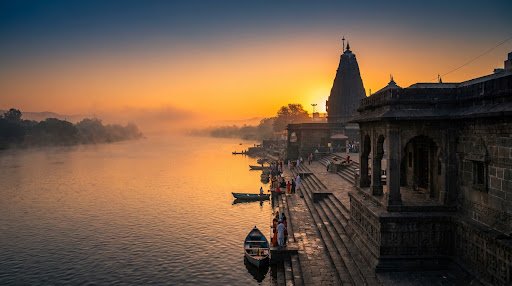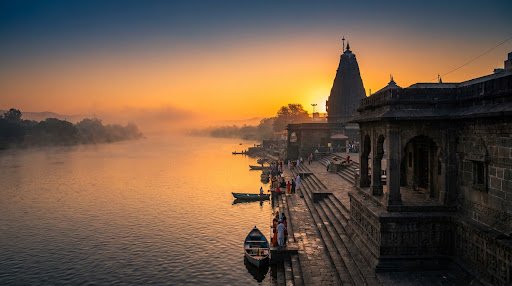
When the planet Jupiter (Brihaspati) transits into the zodiac sign of Leo (Simha Rashi) in August 2027, over 35 million devotees will converge upon the sacred district of Nashik in Maharashtra for the historic Simhastha Kumbh Mela 2027.
Unlike Haridwar, Prayagraj, or Ujjain—where the entire Kumbh congregation centers around a single unified riverbank or Sangam—the Nashik Kumbh Mela is uniquely divided between two distinct sacred geographic poles:
- Ramkund in Panchavati (Nashik City) along the Godavari River.
- Kushavarta Kund in Trimbakeshwar (28 km west of Nashik) at the foot of Brahmagiri Mountain.
This geographical division often leaves pilgrims, first-time visitors, and international travelers with a critical question: Where should you take your holy snan (sacred dip) during Nashik Kumbh 2027?
In this comprehensive, Vedic-grounded guide, we break down the historical traditions, Akhara lineages, astrological muhurats, crowd accessibility, and practical logistics to help you make the right choice for your 2027 pilgrimage.
Quick Comparison: Trimbakeshwar vs. Ramkund at a Glance
| Feature / Criteria | Trimbakeshwar (Kushavarta Kund) | Ramkund (Panchavati, Nashik City) |
|---|---|---|
| Presiding Spiritual Energy | Lord Shiva (Trimbakeshwar 10th Jyotirlinga) | Lord Sri Rama (Maryada Purushottama) |
| Sacred Water Body | Kushavarta Kund (Origin point of Godavari) | Godavari River Ghats (Ramkund, Lakshmankund, Sitakund) |
| Presiding Akharas | Shaiva & Sannyasi Akharas (Juna, Niranjani, Mahanirvani, Atal, Anand, Agni, Avahan) + Udaseen Akharas | Vaishnava Akharas / Bairagi Anis (Nirmohi Ani, Digambar Ani, Nirvani Ani) |
| Distance from Nashik Central (BSL/NK) | ~30 km west (at the foot of Brahmagiri) | 0 to 4 km from Central Nashik |
| Primary Vedic Rituals | Kalsarp Shanti, Tripindi Shradh, Narayan Nagbali, Rudrabhishek | Asthi Visarjan, Pitru Tarpan, Godavari Aarti, Sankalp Snan |
| Ghat Infrastructure | Enclosed stone heritage stepwell tank (~80m x 60m) | Expansive open river ghat network with wide concrete steps |
| Crowd Density on Shahi Snan | Extreme / Bottlenecked (narrow temple town lanes) | Very High but Dispersed (multiple interconnected ghats) |
| Ideal For | Seekers of Shaivite mysticism, Naga Sadhu darshan, tantric Vedic rituals | Families, senior citizens, Vaishnava devotees, day-trippers |
The Historical & Vedic Divergence: Why Two Bathing Sites?
To understand why Nashik Kumbh takes place at two separate locations, one must look into the rich history and traditions of the Kumbh Mela.
In ancient times, both Shaiva ascetics (worshippers of Lord Shiva) and Vaishnava Bairagis (worshippers of Lord Vishnu) gathered together along the Godavari banks. During the 18th century, intense theological rivalry over bathing sequence precedence led the Peshwa administration (Peshwa Balaji Baji Rao) to establish a peaceful, divine demarcation in 1789 CE:
- Shaiva Sadhus & Naga Sannyasis were assigned Trimbakeshwar as their sovereign royal bathing seat around the sanctified Kushavarta Kund.
- Vaishnava Bairagis and Sadhus were assigned Ramkund in Nashik city along the open Godavari riverbanks.
This sacred accord has endured with absolute harmony for over two centuries, creating two distinct spiritual atmospheres during the Simhastha Kumbh.
Deep Dive 1: Ramkund (Panchavati, Nashik City)
       ═══════════════════════════════════════════════
       SACRED WATER FLOW AT PANCHAVATI (NASHIK)
       ═══════════════════════════════════════════════
       [Godavari River] ──► [Ramkund Main Ghat] ──► [Lakshman Kund]
                                  │
                                  ▼
                     [Kapaleshwar & Kalaram Temples]
The Vedic Sanctity of Ramkund
Located in the heart of Panchavati, Ramkund is the sacred pool where Lord Rama, Goddess Sita, and Lord Lakshmana resided during their 14-year forest exile (Vanvas).
According to the Padma Purana and Valmiki Ramayana, it was here that Lord Rama performed the sacred Pitru Tarpan (ancestral rites) and Asthi Visarjan for his father, King Dasharatha. The water in Ramkund possesses a unique geological and spiritual quality: holy scriptures state that bone fragments immersed in Ramkund dissolve and merge into the sacred elements with extraordinary speed.
Akhara Presence at Ramkund
Ramkund is the majestic hub for the Three Vaishnava Anis (Bairagi Akharas):
- Shri Panch Digambar Ani Akhara
- Shri Panch Nirmohi Ani Akhara
- Shri Panch Nirvani Ani Akhara
The grand royal processions of Vaishnava Mahants atop richly decorated chariots, elephant canopies, and brass musical bands proceeding through Panchavati towards Ramkund is a visual spectacle of devotion and bhakti.
Infrastructure & Pilgrim Experience at Ramkund
- Wider Bathing Ghats: Ramkund is flanked by Gandhi Ghat, Talkuteshwar Ghat, and Lakshman Ghat, providing extensive water access.
- Urban Accessibility: Direct access to Nashik city’s four-lane ring roads, state transport terminals, multi-specialty hospitals, and modern hotels.
- Nearby Heritage Temples: Within 500 meters of Ramkund, pilgrims can walk to the 300-year-old black-stone Shree Kalaram Temple, Sita Gumpha (the holy cave of Sita’s abduction), and Kapaleshwar Temple (one of the rare Shiva temples without a Nandi).
Deep Dive 2: Trimbakeshwar (Kushavarta Kund)
       ═══════════════════════════════════════════════
       ORIGIN OF DAKSHIN GANGA AT BRAHMAGIRI
       ═══════════════════════════════════════════════
       [Brahmagiri Peak] ──► [Gangadwar] ──► [Kushavarta Kund]
                                                     │
                                                     ▼
                                    [Trimbakeshwar 10th Jyotirlinga]
The Vedic Sanctity of Kushavarta Kund
Nestled at the base of the majestic Brahmagiri mountain range, Trimbakeshwar holds twofold supreme sanctity:
- It is home to the 10th of the 12 sacred Jyotirlingas, where the lingam uniquely manifests the trilateral faces of the Hindu trinity: Lord Brahma, Lord Vishnu, and Lord Shiva.
- It is the birth origin of the holy Godavari River (Dakshin Ganga), brought down to earth through the intense penance of Sage Gautama.
The Gautami Mahatmya of the Skanda Purana recounts that Sage Gautama cordoned off the surging celestial waters of the Godavari using Kusha (sacred Darbha grass), giving this ancient stepwell pool its eternal name: Kushavarta Kund.
Akhara Presence at Trimbakeshwar
Trimbakeshwar is the vibrant domain of the Dashanami Sannyasi & Shaiva Akharas, including:
- Shri Panch Dashnam Juna Akhara (the largest and most ancient order of Naga Sadhus)
- Shri Panchayati Akhara Niranjani
- Shri Panchayati Akhara Mahanirvani
- Shri Shambhu Panch Atal Akhara, Anand Akhara, Avahan Akhara, and Agni Akhara
- Bada Udaseen & Naya Udaseen Akharas
The Shahi Snan at Kushavarta Kund begins at dawn with the resonating sound of conch shells, damrus, and war horns as thousands of ash-smeared Naga ascetics leap into the sacred emerald waters of Kushavarta.
Infrastructure & Pilgrim Experience at Trimbakeshwar
- Heritage Stone Tank: Kushavarta is a closed square stone stepwell enclosure. Because of its limited perimeter, only a fixed number of people can stand on the inner steps at one time.
- Narrow Foothill Town: The heritage streets surrounding the Trimbakeshwar Jyotirlinga temple are narrow and ancient, requiring rigorous crowd holding pens (holding zones) during major festival dates.
- Profound Spiritual Vibrations: For those seeking deep meditative energy, Shaivite blessings, or conducting specific rituals like Kalsarp Shanti and Narayan Nagbali, Trimbakeshwar is unparallelled.
Shahi Snan Schedule for Nashik Kumbh 2027
To plan your pilgrimage accurately, note the key auspicious dates when the royal baths (Shahi Snan) take place across both locations:
┌─────────────────────────┬───────────────────────────────┬───────────────────────────┐
│ Event / Royal Snan      │ Date (Simhastha 2027)         │ Auspicious Muhurat Focus  │
├─────────────────────────┼───────────────────────────────┼───────────────────────────┤
│ Dhwajarohan (Flag)      │ August 14, 2027               │ Ramkund & Trimbakeshwar   │
│ First Shahi Snan        │ September 03, 2027 (Dwitiya)  │ Royal Processions Open    │
│ Second Major Shahi Snan │ September 18, 2027 (Purnima)  │ Peak Cosmic Alignment    │
│ Third Shahi Snan        │ October 02, 2027 (Amavasya)   │ Solar Conjunction / Bath │
└─────────────────────────┴───────────────────────────────┴───────────────────────────┘
Crucial Pilgrim Note: On the three official Shahi Snan days (Sept 3, Sept 18, Oct 2, 2027), general public entry into both Ramkund and Kushavarta Kund is restricted between 4:00 AM and 1:00 PM while Akharas conduct their royal snan. General pilgrims are granted ghat access from the afternoon onwards.
The Verdict: Where Should YOU Take the Holy Snan?
To determine the ideal destination for your party, evaluate your pilgrimage goals using this simple decision matrix:
Choose Ramkund (Nashik) if:
- You are traveling with senior citizens, young children, or large family groups requiring easy walking access and medical proximity.
- Your primary ritual goal is Pitru Tarpan, Shraddha, or Asthi Visarjan in the sacred memory of ancestors.
- You have limited time (1 to 2 days) and want seamless transit to and from the Nashik Road Railway Station (NK) or Ozar Airport (ISK).
- You want to stay in modern hotels or well-equipped urban tent cities.
Choose Trimbakeshwar (Kushavarta Kund) if:
- You are drawn to the mystical traditions of Shaiva monastic orders and Naga Sadhu processions.
- You wish to combine your holy Kumbh bath with darshan at the Trimbakeshwar 10th Jyotirlinga.
- You need to perform specialized Vedic remedial rituals such as Narayan Nagbali, Tripindi Shradh, or Kalsarp Yog Nivaran.
- You are physically fit to navigate long barricaded holding queues and foothill walking routes.
The Ideal 3-Day Pilgrim Strategy (Experience Both!)
If you have a 3 to 4-day itinerary during Nashik Kumbh 2027, you can experience the divine power of both shrines without stress:
- Day 1: Arrive in Nashik city. Take your holy Sankalp Snan at Ramkund, attend the evening Maha Godavari Aarti, and visit Panchavati temples.
- Day 2: Travel early morning on a non-Shahi Snan day to Trimbakeshwar (30 km). Perform holy snan at Kushavarta Kund, take Jyotirlinga darshan, and explore Brahmagiri foothills.
- Day 3: Visit the holy Akhara Cantonment Zones (Sadhu Gram) in Tapovan (Nashik) to receive blessings from revered spiritual masters and partake in community Mahaprasad (Langar).
Essential Pilgrim Protocol & Safety Tips for Nashik 2027
- Book Accommodations 6 to 9 Months Early: During peak Simhastha dates, accommodation occupancy reaches 100% across Nashik and Trimbakeshwar. Reserve your verified ashrams, dharamshalas, or luxury tent cities well in advance.
- Respect Sacred Water Purity: Avoid using chemical soaps, shampoos, or plastic bags in the Godavari River and Kushavarta Kund. Immerse biodegradable puja offerings only in designated eco-kund bins.
- Carry Physical & Digital Identification: Strict security protocols are enforced across all Kumbh sectors. Keep valid government ID cards (Aadhaar, Passport, Voter ID) easily accessible.
- Wear Anti-Skid Footwear: Ancient stone ghat steps can be mossy and slippery during the monsoon months of August and September.
- Secure an Authorized Purohit: If performing personalized Vedic rites, always engage certified and verified Purohits with authentic lineage credentials.
Plan Your Sacred Nashik 2027 Pilgrimage with KumbhGuide.in
Whether you choose the sacred serenity of Ramkund or the timeless mysticism of Trimbakeshwar, taking a holy dip during the 2027 Simhastha Kumbh Mela is a once-in-twelve-years opportunity for spiritual rejuvenation and karmic cleansing.
Explore our dedicated Nashik 2027 Destination Hub, check the Complete 2027–2028 Shahi Snan Calendar, or Reserve Personalized Purohit & Sankalp Seva Services with verified Vedic scholars.